
Recognizing when your aging parent needs additional support can be challenging, especially when changes happen gradually over time. Understanding the warning signs helps you make informed decisions about your parent’s safety and wellbeing before a crisis occurs.
Physical Health and Mobility Changes
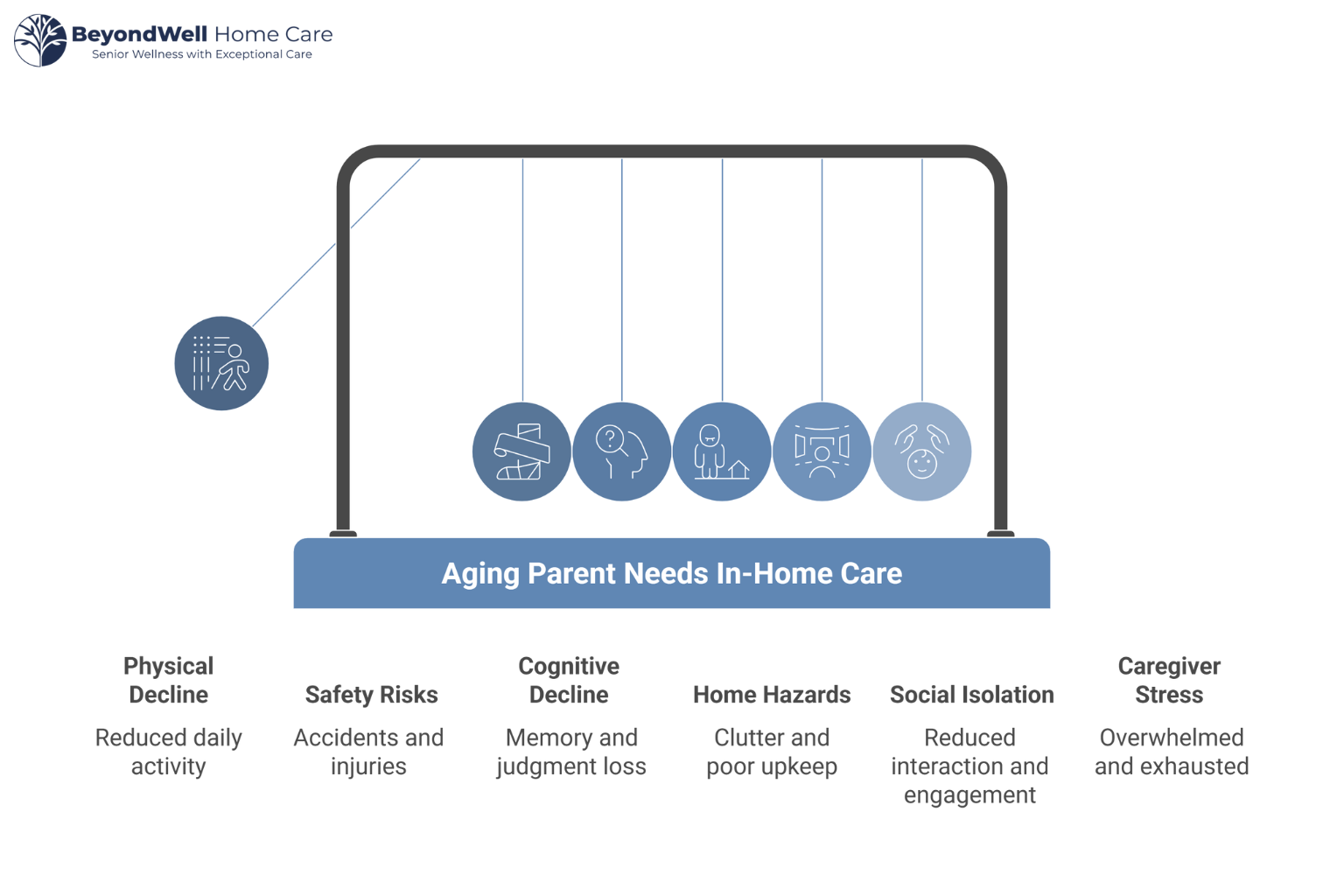
Physical decline often provides the most obvious indicators that home care services might be necessary. Watch for changes in your parent’s ability to perform daily activities safely and independently.
Key physical warning signs include:
- Frequent falls or near-falls, even minor ones that seem insignificant
- Difficulty getting up from chairs, beds, or the toilet without assistance
- Noticeable weight loss or changes in appetite and eating habits
- Poor personal hygiene or wearing the same clothes repeatedly
- Unexplained bruises, cuts, or injuries that suggest accidents
- Mobility issues like shuffling, unsteady walking, or relying heavily on furniture for support
- Medication organization problems, including missed doses or taking medications incorrectly
These physical changes often develop slowly, making them easy to overlook during regular visits. However, they can significantly impact your parent’s ability to live safely alone and may indicate the need for professional assistance with daily tasks.
Living alone at home in the golden years can present a few unique challenges. Trust senior home care professionals to help your senior loved one maintain a higher quality of life while he or she lives with an illness and performs the daily tasks of living.
Cognitive and Memory Concerns
Memory issues and cognitive changes can pose serious safety risks if left unaddressed. Even mild cognitive decline can affect judgment and decision-making abilities in ways that compromise daily living.
Signs of cognitive decline that warrant attention include:
- Forgetting important appointments, medications, or daily routines
- Confusion about time, dates, or familiar places
- Difficulty managing finances, paying bills, or making financial decisions
- Getting lost while driving in familiar areas
- Repeating questions or stories within short time periods
- Poor judgment in situations that were previously manageable
- Personality changes, increased anxiety, or uncharacteristic behavior
These symptoms might indicate conditions like dementia, depression, or medication side effects. Professional caregivers trained to recognize and respond to cognitive changes can provide appropriate supervision and support.
Home Environment and Safety Issues
The condition of your parent’s home environment reveals important information about the ability to maintain his or her living space and identify potential hazards.
Environmental red flags include:
- Cluttered walkways that create tripping hazards
- Spoiled food in the refrigerator or empty cabinets suggesting poor nutrition
- Unpaid bills, disconnected utilities, or financial paperwork in disarray
- Strong odors indicating incontinence issues or poor housekeeping
- Burn marks on pots, forgotten items on the stove, or other cooking safety concerns
- Neglected home maintenance like broken fixtures, leaky plumbing, or heating issues
- Pet care problems if your parent has animals
A decline in housekeeping standards often reflects physical limitations, cognitive changes, or depression rather than simple laziness. Professional home care services can address both safety concerns and underlying causes.
Many older adults are choosing to age in place, and some need a helping hand to continue living at home safely and comfortably. Luckily, there is professional homecare Lincoln seniors can trust and rely on.
Social Isolation and Emotional Changes
Social withdrawal and emotional changes frequently accompany aging but can accelerate health issues if not addressed properly. Isolation affects both mental and physical health, creating a cycle that worsens over time.
Warning signs of problematic isolation include:
- Canceling social activities or family gatherings your loved one previously enjoyed
- Decreased communication with friends, family, or neighbors
- Expressing feelings of loneliness, hopelessness, or being a burden
- Loss of interest in hobbies, television shows, or activities your parent once loved
- Increased anxiety about leaving the house or having visitors
- Sleep pattern changes, including sleeping too much during the day
- Irritability or mood swings that seem out of character
Professional caregivers provide companionship and social interaction while encouraging engagement in meaningful activities. This social component of care often proves as valuable as assistance with physical tasks.
Increased Family Caregiver Stress
Sometimes the clearest indicator that professional help is needed comes from recognizing your own limitations as a family caregiver. Acknowledging when you need support protects both you and your parent.
Signs family caregivers need additional help include:
- Feeling overwhelmed by caregiving responsibilities while managing work and personal life
- Frequent conflicts with your parent about his or her care or safety
- Physical exhaustion from providing hands-on care or frequent emergency responses
- Anxiety about your parent’s safety when you’re not present
- Difficulty maintaining your own health, relationships, or professional responsibilities
- Recognizing your parent needs more specialized care than you can provide
Research from caregiving organizations shows family caregivers often wait too long before seeking professional assistance, leading to burnout and compromised care quality. Home care services can supplement family efforts rather than replace them, creating a sustainable care plan that benefits everyone involved.
Families who find it difficult to care for their aging loved ones without assistance can benefit greatly from professional respite care. Lincoln, CA, family caregivers who need a break from their caregiving duties can turn to BeyondWell Home Care. Our caregivers can encourage your loved one to eat well, exercise regularly, get plenty of mental and social stimulation, and focus on other lifestyle factors that promote longevity. For reliable in-home care services, contact us today.